
ISITMAXElektrische Heizsysteme
Snow and ice prevention heating set beneath concrete, Proline series
Schnee- und Eisfreihaltung

Ramp Wheel-Track Heating

Ramp Wheel-Track Heating is a snow melting system that keeps only the two strips the vehicle wheels run on free of snow and ice on a garage or car park ramp.

Artikel-Nr.: ISX-RAMPA-TEKER-IZI Kategorie: Schnee- und Eisfreihaltung
Richtpreis · ab
€885 / $1 020

Richtpreis ab Werk Istanbul, zzgl. MwSt., Fracht und Zoll. Umgerechnet vom TRY-Listenpreis zum angegebenen Kurs; verbindlich erst im Angebot.
Kurs vom: 2026-09-15

Verfügbare Größen

  • 50 cm single track
  • 50 cm double track
  • 100 cm single track
  • 100 cm double track

Verfügbare Größen

  • 5 m
  • 6 m
  • 7 m
  • 8 m
  • 9 m
  • 10 m
  • 12 m
  • 15 m
  • 18 m
  • 20 m
  • 25 m
  • 30 m

Verfügbare Größen

  • TMaxPro cable + fixing strip
  • ProMat ready-made mat

Verfügbare Größen

  • Ekoline
  • Proline
  • Maxline

Überblick

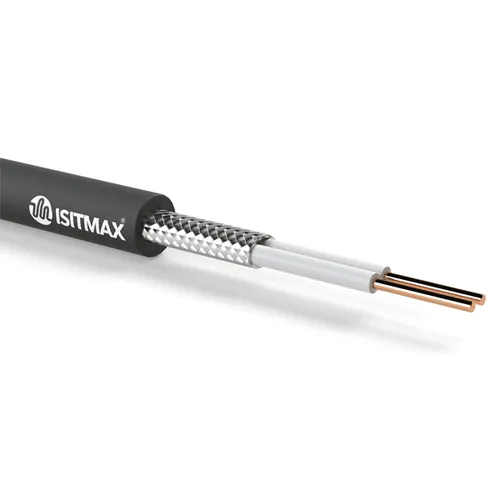
Ramp Wheel-Track Heating is a snow melting system that keeps only the two strips the vehicle wheels run on free of snow and ice on a garage or car park ramp, using a 350 W/m² electric heater buried beneath the concrete. The heater is either TMaxPro cable fixed to the reinforcement mesh or ProMat mat with the cable arranged on mesh; the two are the same cable, produce the same power and cost exactly the same per square metre. Ramp wheel-track heating runs by itself from a control panel with moisture and temperature sensors — it switches on when snow falls and off when the surface dries.

Ramp wheel-track heating is a snow melting method that heats not the whole surface of a garage ramp but only the two narrow strips the vehicle's wheels run on. The logic is simple: for a vehicle to get traction the whole ramp does not need to be clear of snow — it is enough for the surface the tyres touch to be clear. This brings the heated area down by half, and in some layouts to a quarter.

Auf einen Blick

350 W/m² snow melting powerThe standard design point at residential and commercial ramp scale; it keeps the heated strip free of snow.
Only the wheel tracks are heatedTwo strips instead of the whole ramp: the installed power and the load on the fuse fall markedly.
Automatic operation with moisture + temperature sensorsIt switches on when precipitation is detected and off when the surface dries. Sensor-based control cuts consumption by up to 40%.
Our own manufacture since 1995CE-certified manufacture, shipping throughout Türkiye, technical support Monday–Saturday 09:00–17:00.

Einsatzbereiche

Ekoline

Panel with temperature sensor only

Ekoline Measures the ground temperature and runs the system below a set threshold. It does not detect precipitation — it will run when the air is cold even if there is no snow. It is sufficient on small areas and where the habit is to switch on by hand.

Proline

ISITMAX panel with moisture + temperature sensors

Proline Detects precipitation as well as temperature: it runs only when snow is falling and the surface is wet, and switches off once it dries. Sensor-based control cuts the energy cost by up to 40%. This is the right step for most ramps.

Maxline

Eberle panel with moisture + temperature sensors

Maxline The same logic, with industrial-grade equipment. It is the choice for large areas, high connected loads, multi-zone control and commercial facilities that must run without interruption.

Technische Daten

PropertyValue
Product, application, outputRamp wheel-track heating — snow and ice melting system beneath concrete · TMaxPro cable + fixing strip or ProMat ready-made mat · 350 W/m²same cable, same output and same price per square metre in both types
Track layout and length50 cm single · 50 cm double · 100 cm single · 100 cm double · ramp length 5 – 50 metresheated area = length × area per metre; it comes out between 5 m² and 72 m². The upper length limit depends on the track layout: 50 cm single 50 m · 50 cm double and 100 cm single 35 m · 100 cm double 18 m
Supply and protection220 – 240 V AC, 50 Hz · IP67 · two layers of polymer insulation · continuous earth protection and screening · 30 mA residual current device (RCD) mandatory
Laying and concrete6 – 8 cm depth from the surface · recommended slab 10 – 13 cm · fixed to the reinforcement mesh with plastic ties at 0.9 – 1.2 m intervals · at least 15 cm from the edge · cables must not crosswire ties are not used; the sensor conduit goes between two runs, at least 1.3 cm from the cable
ControlEkoline temperature sensor only · Proline ISITMAX panel with moisture + temperature sensors · Maxline Eberle panel with moisture + temperature sensors · run-on 30 – 120 minutesthe control panel is included in the price
Operating behaviourPre-heating 1 – 2 hours before precipitation · first effect on the surface in 30 min – 1 hour · complete melting in 4 – 6 hours in most cases · not to be operated until the concrete has cured for 28 – 30 days
Manufacture and warrantyOur own CE-certified production since 1995 · 10-year SafeMax warranty on the heating element · control panel, sensors and fixing strip 2 years

Auswahlhilfe

Why 350 W/m² for ramp wheel-track heating?

ConditionEffect
A design temperature falling below −15 °CThe power is increased; a project-based calculation is required
Altitudes above 1,000 metresThe power is raised for every 1000 metres of altitude
Sustained wind above 6 m/sConvective loss from the surface rises and the power is increased
A suspended slab with open space below, a bridge, a ramp over a terraceDownward loss grows; the power increases and insulation underneath becomes essential
A normal ramp sitting on the ground with insulation beneath350 W/m² is the design point

Ist dies das richtige Produkt?

Passend, wenn

  • You have a reinforced concrete garage or car park ramp and getting vehicles out is a problem in winter because of icing.
  • The vehicle tracks are fixed and predictable; there is no pedestrian traffic on the ramp, or the route pedestrians walk has been dealt with separately.
  • Your ramp is being newly built or its concrete renewed — the heater is buried beneath the concrete; it cannot be added over the top later.
  • There is, or will be, a drainage channel or drainage grating at the foot of the ramp.
  • You want to keep the installed power and the load on the fuse low; the connected load of heating the whole area is too much for your circuit.

Nicht geeignet, wenn

  • If the whole ramp is to be heated — the right product is Snow and Ice Melting Under Concrete, measured by the square metre.
  • If you are heating stairs, a landing or a building entrance — Stair and Building Entrance Heating is dimensioned for that geometry.
  • If you do not want to break up the existing concrete — this is a system that goes beneath concrete; it is not applied to the surface afterwards.
  • If you are heating a roof, gutter or downpipe — roof and gutter snow melting is a separate product.
  • If you are heating an indoor floor — 350 W/m² is far too high for an enclosed space; see the room products in the floor heating family.

Installation

  1. PreparationThe sub-base and levelling are completed, any insulation beneath is laid, and the reinforcement mesh is positioned. The position of the wheel-track strips is marked out to the width of the vehicle; make sure the area to be heated is extended as far as the drainage channel at the foot of the ramp. The cable route and the panel position are established from the outset.
  2. LayingThe mat rolls are unrolled along the strips, or if cable has been chosen it is seated in the teeth of the strip. The heater is fixed to the mesh with plastic ties at 0.9 – 1.2 metre intervals; wire ties are not used. The runs must not cross or overlap and must stay at least 15 cm from the edge of the slab. The sensor conduit is placed between two runs, at least 1.3 cm from the cable.
  3. Connection, testing, concreteThe cold leads are pulled to the panel; an electrician makes the connection, the circuit is protected by a 30 mA residual current device and the earth is bonded to the busbar. An ohm test is carried out before the concrete is poured and recorded. Once the test is passed the concrete is poured; the heater stays 6 – 8 cm below the surface. The system is commissioned after the concrete has cured for 28 – 30 days.
The ohm test before screeding is not negotiable. The resistance of the heater is measured; you find the expected value from the formula in the electrical data section. If there is any deviation, nothing is covered over under any circumstances. On a ramp this rule matters even more than indoors, because reaching a fault later means breaking up a reinforced concrete slab.

Bestellung und Lieferung

  1. same dayThe order is placed from the ramp wheel-track heating selector by specifying the track layout, ramp length, heater type and panel
  2. 1 working dayThe ramp sketch arrives; the length, width, gradient and the position of the drainage channel are confirmed
  3. 1–2 working daysThe heater is prepared to the strips and the cold leads are brought out along the panel route
  4. 2–4 working daysHandover to the carrier, tracking number, delivery throughout Türkiye
  5. as requiredTechnical support during laying, resistance testing and commissioning of the panel

Garantie und Support

Ramp wheel-track heating is a CE-certified product of ISITMAX's own manufacture, carried on since 1995; we ship throughout Türkiye. For project calculations, dimension checks and questions during installation you can reach us on WhatsApp and at info@isitmax.com.

Häufige Fragen

Is ramp wheel-track heating as safe as heating the whole ramp?
For a vehicle yes, for a pedestrian no. As long as the vehicle's wheels run on the heated strips there is no traction problem. But someone walking on the ramp will step outside the strips, and that area stays slippery. If there is pedestrian traffic on the ramp, heating the whole area is necessary.
Why is the ramp length asked for rather than the square metres?
Because the track layout determines the square metres: area = ramp length × heated area per metre. On a 10 metre single-track ramp the 50 cm layout comes to 10 m², and if the same ramp carries traffic both ways, 20 m². If both the square metres and the track were asked for, contradictory selections would be possible.
What do single track and double track mean — is it the number of wheels?
No — it is how many vehicle lanes the ramp has. In both cases both of the vehicle's wheel tracks are heated. On a single-lane ramp vehicles pass in one file and two tracks are heated; on a double-lane ramp, where up and down traffic run side by side, four tracks are heated and the heated area doubles. The width of the strip (50 cm / 100 cm) is a separate choice: 50 cm for passenger cars, 100 cm for commercial vehicles.
Why do 50 cm double track and 100 cm single track cost the same?
Both heat 2 m² per metre; the amount of heater and the power it draws are the same. The difference is in the distribution: 50 cm double track goes to the four narrow tracks of a two-way ramp, while 100 cm single track goes to the two wide tracks of a single-lane ramp. With passenger cars and two-way traffic the first is right; with commercial vehicles and a single lane, the second.
Do I have to switch the system on and off myself?
No — with Proline and Maxline panels the system runs itself: the moisture sensor sees precipitation and the ground sensor sees temperature, it switches on when both conditions are met, and once the surface dries it shuts off after 30 – 120 minutes of run-on. Ekoline looks only at temperature, so it will also run on cold days with no snow.

Ähnliche Produkte

Angebot anfordern

Beschreiben Sie die Anwendung — wir legen das System aus und erstellen ein Angebot.